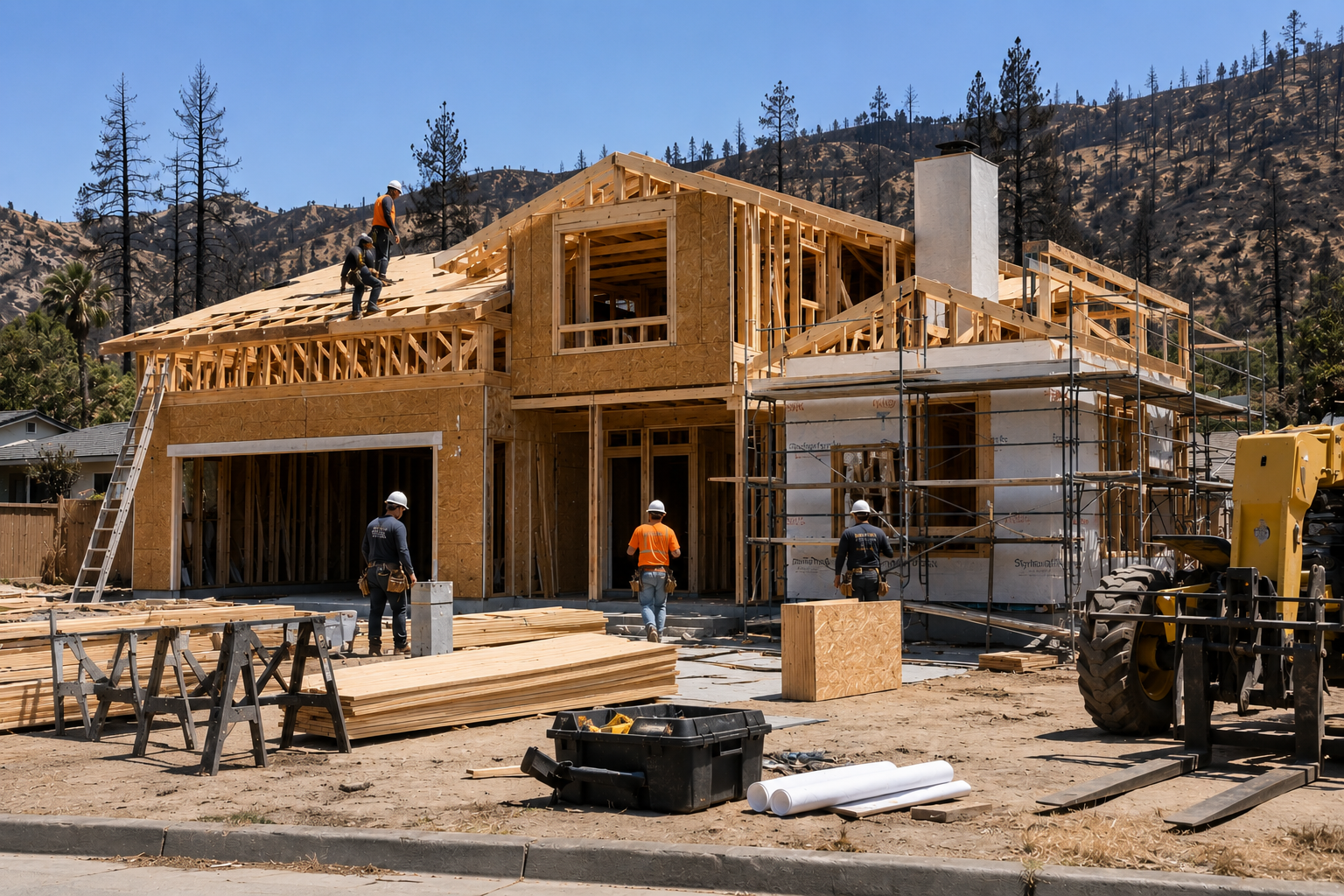
Residential reconstruction after a disaster involves restoring a home to its pre-loss condition through a coordinated rebuild process that follows mitigation and remediation. It includes structural repairs, replacement of damaged building systems, interior finish work, and final inspections. The process is more complex than standard renovation because it occurs within an active insurance claim, requires documentation at each phase, and must coordinate with adjusters on scope and cost approvals before work proceeds.
Understanding what reconstruction involves before the process begins prevents the disputes, delays, and cost overruns that catch property owners off guard.
When Does Reconstruction Begin?
Reconstruction begins after the structure passes final mitigation clearance. That means moisture readings confirm all affected materials have reached dry standard, mold remediation clearance testing is complete where applicable, and all unsalvageable materials have been removed. Starting reconstruction before mitigation is complete is one of the most common mistakes in post-disaster restoration, because enclosing materials that are still wet or contain mold guarantees a recurring problem.
AGI manages the transition from mitigation to reconstruction as part of a unified restoration scope. The same company that handles water damage restoration and mold remediation carries the project through to reconstruction, eliminating the coordination gap that occurs when a separate general contractor is brought in without full context on what the mitigation phase found and addressed.
What the Reconstruction Scope Covers
Structural Repairs
Water damage, fire, and structural impacts from storms can compromise framing, load-bearing elements, and connections. Structural repairs are assessed and documented before any finish work begins. Where structural engineering is required, a licensed engineer is involved in the assessment and the repair design. This phase may require permits depending on the jurisdiction and the scope of the structural work.
Building Systems
Electrical, plumbing, and HVAC systems affected by the disaster are replaced or repaired before interior finish work covers them. Systems that were exposed to water, fire, or smoke require inspection and certification before they are re-enclosed. Skipping this step and covering damaged systems with new drywall creates both a safety hazard and a future insurance complication.
Interior Finishes
New drywall, insulation, flooring, trim, cabinetry, paint, and fixtures restore the interior to pre-loss condition. Material selections are documented and submitted to the insurance adjuster for approval before purchase. Using materials of like kind and quality to what existed before the loss is the standard for insurance-covered reconstruction and the baseline for any dispute about scope or cost.
AGI’s residential construction team manages interior finish work with the same attention to insurance documentation that guides the mitigation phase. Material selections, labor costs, and installation documentation are organized in the format adjusters require, not assembled after the fact when the adjuster asks for justification.
The Insurance Coordination Challenge in Reconstruction
Reconstruction after a disaster requires adjuster approval on scope and cost before work begins on each phase. Adjusters review line-item estimates and approve, dispute, or request revisions before issuing payment authorizations. Property owners who do not understand this process often find work has been completed without authorization, creating payment disputes that delay project completion.
A restoration company with established insurance coordination processes manages the adjuster relationship through each phase of reconstruction, keeping approvals ahead of the work and resolving disputes with documentation rather than with escalation.
For property owners dealing with fire and smoke damage reconstruction, the scope often extends beyond what is immediately visible because smoke damage throughout the home requires treatment at every surface, not just in the fire origin area. A reconstruction scope that accounts for the full smoke damage footprint from the start produces a complete claim rather than a series of supplemental claims as additional damage is discovered.
Permits and Inspections
Reconstruction after a significant loss requires permits in most jurisdictions. The permit process establishes a code compliance record for the repair work and protects the property owner from liability for unpermitted structural or systems work. Restoration companies that bypass permits to accelerate timelines create problems that surface during future property sales or additional insurance claims.
Inspections at key phases of the reconstruction, framing, rough electrical and plumbing, insulation, and final, confirm that the work meets code before it is covered. These inspections are not bureaucratic obstacles. They are the documentation that confirms the reconstruction was completed properly.
What Turnkey Reconstruction Means in Practice
Turnkey reconstruction means a single company manages the entire process from damage assessment through final completion without the property owner coordinating between multiple vendors. One point of contact. One scope of work. One timeline. One set of documentation for the insurance claim.
AGI’s catastrophe response and residential construction capabilities make this turnkey model possible even in large-scale loss situations. The same company that deployed for emergency mitigation carries the property through to a completed reconstruction, with the full documentation record that supported the mitigation phase extending through every phase of the rebuild.
Frequently Asked Questions
Q: What does residential reconstruction after disaster damage involve?
A: Residential reconstruction covers structural repairs, replacement of affected building systems including electrical, plumbing, and HVAC, and interior finish work including drywall, insulation, flooring, trim, cabinetry, and paint. The process occurs within an active insurance claim, requires adjuster approval on scope and cost before work proceeds, and must follow mitigation clearance confirming all moisture and mold issues have been resolved before new materials are installed.
Q: When does reconstruction start after water or fire damage?
A: Reconstruction begins after the structure passes final mitigation clearance. For water damage, that means all affected materials have reached documented dry standard through moisture meter confirmation. For mold, post-remediation clearance testing must confirm normal spore levels. Starting reconstruction before these clearances are complete risks enclosing materials that will produce recurring problems after the new finishes are installed.
Q: Do I need permits for reconstruction after a disaster?
A: Yes, in most jurisdictions. Permits establish a code compliance record for the repair work and protect the property owner from liability for unpermitted structural or systems work. The permit and inspection process confirms the reconstruction meets current code requirements, which matters both for safety and for future property transactions. Restoration companies that bypass permits to accelerate timelines create documentation problems that surface later.
Q: What is turnkey reconstruction after a disaster?
A: Turnkey reconstruction means a single company manages the complete process from damage assessment through final completion without the property owner coordinating between separate mitigation, remediation, and construction vendors. One point of contact handles the full scope, the insurance coordination, the permit process, and the final documentation, producing a complete and consistent record that covers the entire restoration from first call through move-in.
Facing reconstruction after a disaster loss? Anderson Group International handles the full process from mitigation through rebuild with integrated insurance coordination. Call now to get your project moving.