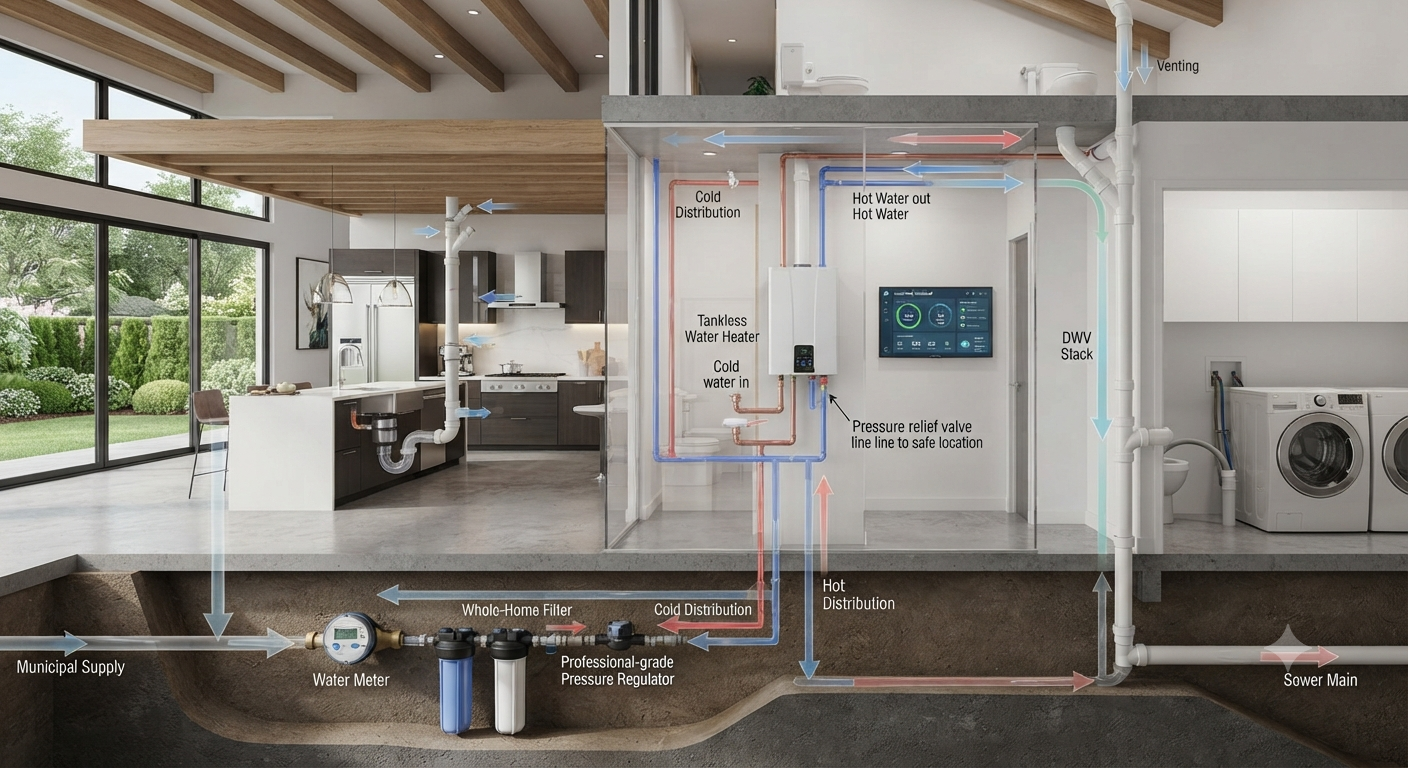
Water damage looks contained until it isn’t. What appears to be a wet floor in one room is often the visible tip of a moisture migration that has traveled through wall cavities, under flooring, along structural framing, and into adjacent spaces over hours or days before the damage is discovered. Understanding where water goes is what separates a restoration that solves the problem from one that addresses only what’s visible.
The First 30 Minutes: Gravity and Pathways
Water introduced into a structure by a burst pipe, appliance failure, or roof intrusion follows the path of least resistance downward and outward simultaneously. It runs along floor joists to distant areas of the subfloor before saturating through to the floor below. It enters wall cavities at the base plate and wicks upward through insulation. It collects in low points behind cabinetry and under appliances where it remains invisible for days.
In a two-story home, water from a second floor failure can travel the full height of the structure before it is discovered, saturating subfloor sheathing, wall framing, ceiling drywall on the floor below, and even reaching the basement or crawl space. The floor where the water entered is often the least saturated area by the time the damage is found.
How Thermal Imaging Finds What You Cannot See
Calibrated moisture meters measure moisture content at depth in specific materials. Thermal imaging cameras identify temperature differentials across wall and ceiling surfaces that indicate moisture presence behind the surface without requiring any demolition. Together, these tools allow AGI’s water damage restoration teams to map the full extent of moisture migration before any drying equipment is placed, ensuring the equipment addresses the actual loss footprint rather than only the visible wet zone.
Properties that receive restoration without thermal imaging assessment regularly develop mold problems in areas that were never included in the drying scope because the moisture presence was not identified at the start. The mold appears weeks later, often inside walls or under flooring in rooms adjacent to where the original water damage occurred.
What Hidden Moisture Does to Building Materials
Drywall paper begins to support mold growth within 24 to 48 hours of saturation. Wood framing holds moisture longer but degrades structurally with extended exposure. Insulation saturated with water does not dry on its own and must be removed. Subfloor sheathing that remains wet under finished flooring can cup, buckle, and eventually delaminate, requiring complete replacement rather than the targeted repair that would have been possible with early intervention.
The progression of secondary damage is why response time matters more than almost any other factor in water damage outcomes. The same loss addressed within two hours consistently produces a smaller scope, shorter timeline, and lower cost than the same loss addressed twelve hours later.
Common Hidden Moisture Locations by Property Type
In residential properties: wall cavities behind the source area, subfloor under hardwood or tile flooring, crawl spaces below affected rooms, and insulation between floors. AGI’s residential construction experience means the team recognizes which building assemblies conceal moisture in each construction type and inspects them as a standard part of the damage assessment.
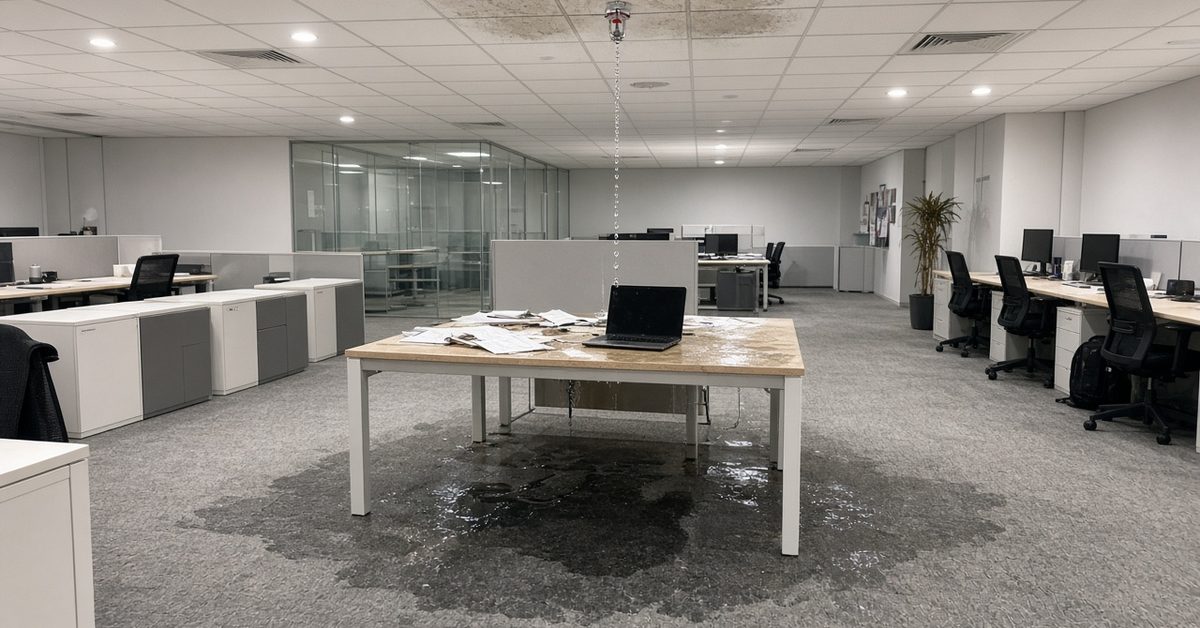
In commercial properties: above-ceiling tile into structural steel or concrete deck, behind wall systems in server rooms and mechanical spaces, under raised flooring in data centers, and throughout suspended ceiling grid systems. Commercial buildings with complex mechanical and electrical infrastructure require assessment protocols that account for the specific systems present. AGI’s commercial construction division handles large-scale water losses with the specialized assessment approach these properties require.
Why Drying Documentation Matters
Proper structural drying produces daily moisture readings across all affected materials from the first day through final clearance. These readings confirm that drying is progressing, identify materials that need additional equipment or treatment, and produce the documented evidence that the structure reached dry standard before reconstruction began. This documentation is the basis for the insurance claim and the protection against future mold-related disputes.
Properties where reconstruction proceeded without documented dry standard clearance have no evidence record to counter future claims that mold resulted from incomplete restoration. AGI’s mold remediation team regularly addresses mold that established after water losses where the drying was never confirmed with documentation.
Frequently Asked Questions
Q: How far can water travel from a burst pipe before being discovered?
A: Water from a burst pipe can travel 30 to 50 feet or more along floor joists and structural framing before any visible evidence appears. In multi-story construction, water can travel vertically through the full height of the building. The visible wet area at discovery is typically a fraction of the total moisture footprint.
Q: How do restoration professionals find hidden moisture?
A: Calibrated moisture meters measure moisture content at depth in specific materials. Thermal imaging cameras identify temperature differentials on wall and ceiling surfaces that indicate moisture presence behind the surface without demolition. Together these tools map the full moisture footprint before drying equipment is placed, ensuring the scope addresses all affected areas.
Q: What happens if hidden moisture is not found and dried?
A: Moisture that remains in building materials after a water damage event creates conditions for mold growth within 24 to 48 hours. Mold that establishes inside wall cavities, under flooring, or in ceiling assemblies that were not included in the drying scope typically appears weeks after restoration appears complete and requires full mold remediation rather than the simpler drying that would have addressed it initially.
Q: How long does structural drying take?
A: Standard residential structural drying with professional industrial equipment takes three to five days. Dense materials including hardwood flooring, concrete, and thick plaster take longer. New England and Gulf Coast climates with high ambient humidity extend drying timelines compared to arid regions. The timeline ends when calibrated moisture readings across all affected materials confirm dry standard, not when a fixed number of days has passed.
Water damage in your home or building? AGI deploys thermal imaging and industrial drying equipment to find and address every moisture pocket. Call now for same-day certified response.