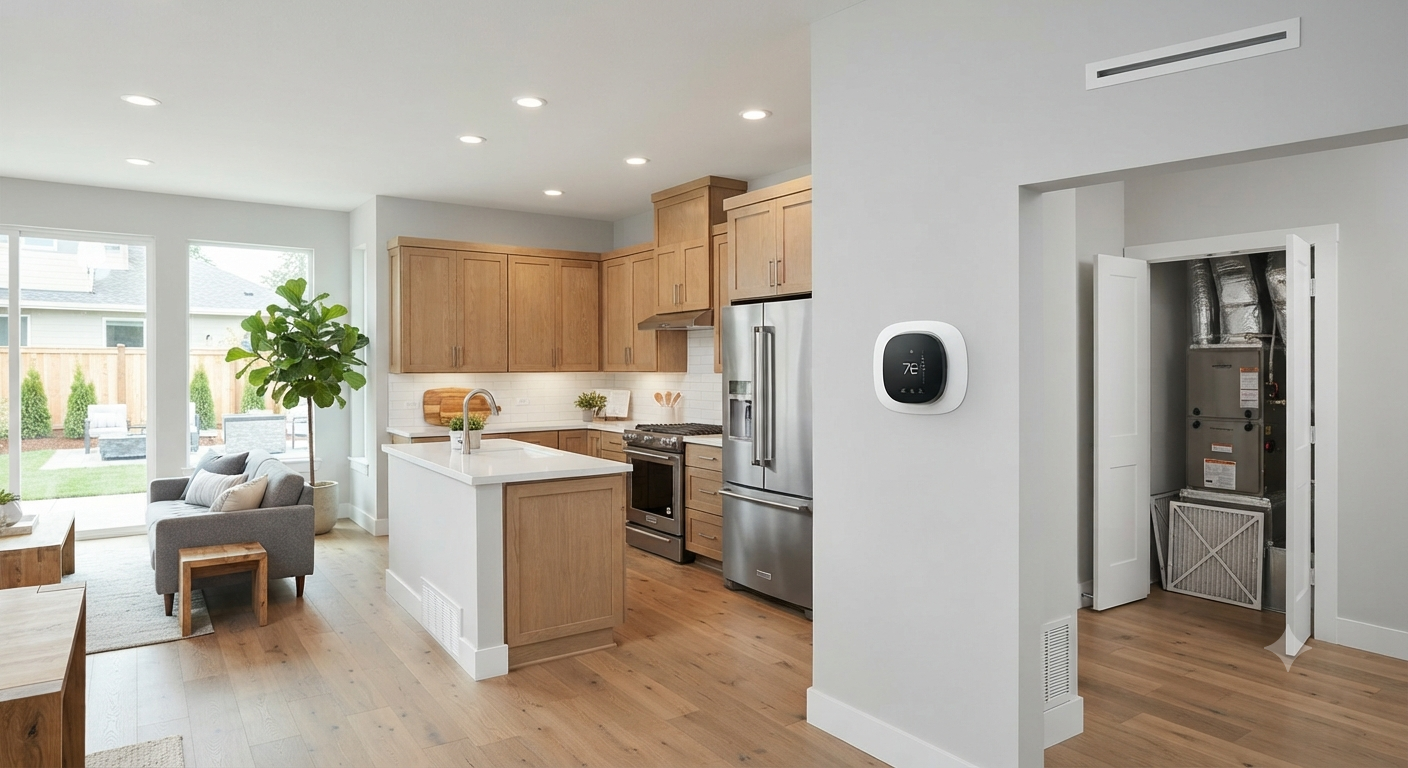
Your HVAC system is the most overlooked damage point in a house fire. While visible soot and smoke staining get immediate attention, the air handler, ductwork, and vents have already pulled smoke-laden air throughout every room in the home, and that contamination keeps redistributing every time the system runs. Skipping HVAC cleaning after a fire restoration is one of the most common reasons homeowners report recurring smoke odor weeks after the visible cleanup appears finished.
How Smoke Gets Into Your HVAC
During a fire, the HVAC system’s return vents pull air from the affected area continuously. Soot particles, volatile organic compounds, and combustion byproducts deposit throughout the air handler, evaporator coil, and all connected ductwork. This happens even when the fire is confined to one room, because the duct system connects every area of the home.
The same contamination pattern appears in commercial buildings. Office spaces, retail stores, and multi-tenant properties connected to centralized HVAC systems distribute smoke residue across floors and units far from the original fire location. AGI’s fire and smoke damage teams assess the full duct system as part of every fire restoration scope, not as a secondary step.
What Happens If You Skip HVAC Cleaning
Contaminated ductwork becomes a continuous redistribution system. Soot particles and odor compounds dislodge from duct surfaces each time the system cycles and circulate through living and working spaces. Residents and employees report headaches, respiratory irritation, and persistent odor. The problem is often misdiagnosed as incomplete surface cleaning when the actual source is inside the duct system.
There is also a secondary health concern. The protein compounds in smoke residue are acidic and degrade duct lining materials over time. Duct insulation that absorbs smoke contamination can become a persistent odor source for months after the initial restoration.
What Professional HVAC Cleaning After Fire Involves
- Removal and replacement of all HVAC filters before any cleaning begins
- HEPA vacuuming of the air handler, blower motor housing, and evaporator coil
- Negative pressure duct cleaning using equipment that captures loosened contaminants rather than redistributing them
- Antimicrobial treatment of duct surfaces where smoke residue has created microbial growth conditions
- Replacement of flexible duct sections that cannot be cleaned to safe levels
Timing: When HVAC Cleaning Happens in the Restoration Process
HVAC cleaning should happen early in the restoration sequence, not at the end. Running the system before the ductwork is cleaned defeats the surface remediation work happening simultaneously. Every cycle of the contaminated system redeposits soot on freshly cleaned walls and ceilings.
For homeowners going through residential construction or rebuild after a fire loss, HVAC cleaning and inspection is also required before new drywall is installed, because contaminated ductwork enclosed behind new walls creates an odor problem that has no solution short of tearing out the new finishes.
What This Means for Commercial Properties
Commercial properties face an additional layer of complexity. A fire in one tenant’s space can contaminate the shared HVAC system serving adjacent units. Building managers and property owners who handle commercial construction after a fire event need to assess the full HVAC footprint, not just the area where the fire occurred. Tenant complaints about air quality in supposedly unaffected units frequently trace back to shared duct contamination from a single source fire.
Businesses also face operational pressure to return to service quickly. A rushed restoration that skips duct cleaning creates a pattern of recurring complaints and potential liability from tenants and employees who experienced health symptoms from residual smoke exposure.
Documentation for the Insurance Claim
HVAC cleaning is a covered expense under most standard homeowner and commercial property policies when the ductwork was contaminated by a covered fire event. The documentation that supports this component of the claim includes pre-cleaning inspection photographs, the cleaning scope of work, and in some cases air quality sampling before and after to confirm the system was returned to acceptable conditions.
AGI prepares this documentation as part of the standard fire restoration package for every job, whether it involves a single-family home or a large commercial facility. The specialty services team handles situations where the HVAC contamination extends into complex mechanical systems beyond standard residential duct cleaning.
Frequently Asked Questions
Q: Does homeowners insurance cover HVAC cleaning after a fire?
A: Yes, in most cases. HVAC cleaning is covered as part of the fire damage restoration scope when the system was contaminated by a covered fire event. The key is documenting the contamination before cleaning begins and including the HVAC scope in the same claim as the structural restoration. AGI prepares this documentation as part of every fire restoration package.
Q: How long does HVAC cleaning take after a fire?
A: Residential HVAC cleaning as part of fire restoration typically takes one full day. Larger commercial systems or heavily contaminated ductwork may take two to three days. The work should be completed before surface cleaning of rooms is finalized to prevent the clean duct system from recontaminating freshly treated surfaces.
Q: Can we run the HVAC while fire restoration is happening?
A: No. Running a contaminated HVAC system during restoration redistributes soot and odor compounds onto surfaces being cleaned and undoes completed work. The system should be shut down and locked out at the start of restoration and not restarted until duct cleaning and air quality verification are complete.
Q: What if my commercial building’s HVAC serves multiple tenants?
A: If a shared HVAC system was exposed to a fire event in any connected space, all areas served by that system should be assessed for contamination before the system is returned to service. Tenant units beyond the fire origin may have received smoke contamination through the shared ducts. A restoration company with commercial experience will assess the full system footprint rather than limiting the scope to the fire origin area.
Fire damaged your home or commercial property? AGI handles full fire and smoke restoration including HVAC cleaning and air quality verification. Call now for certified emergency response.