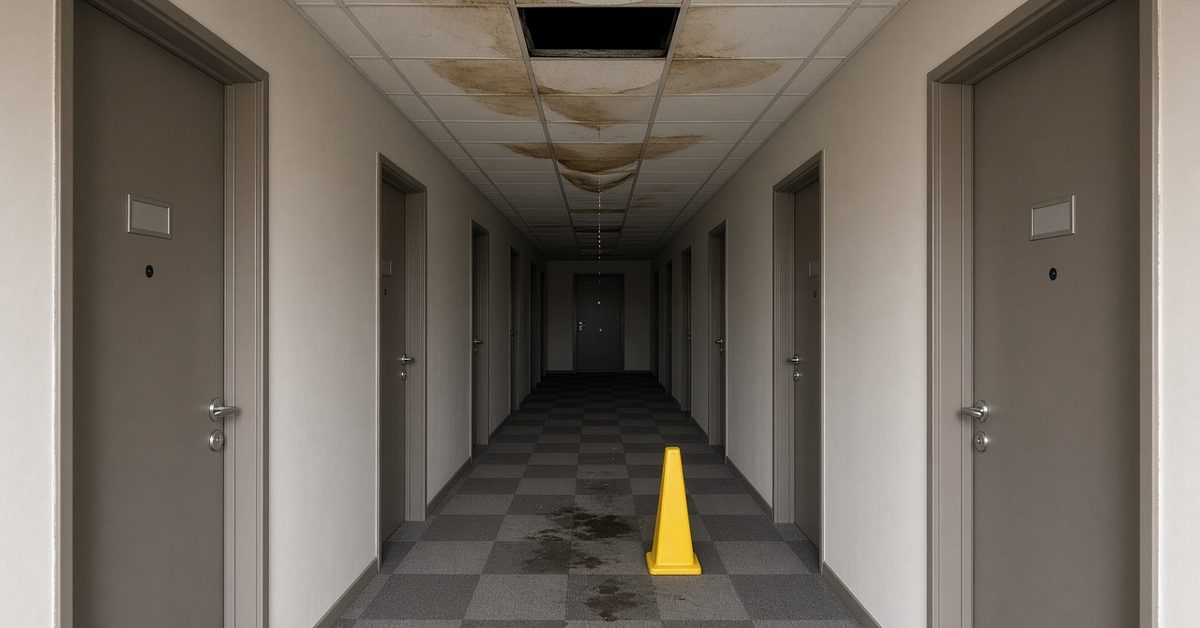
Property managers know the phone call. A resident on the fourth floor reports water coming through the bathroom ceiling. By the time maintenance arrives, the unit below has a wet kitchen, the one below that has a stain spreading across the living room, and someone on the ground floor is asking why the hallway carpet is soaked.
In multi-family buildings, water does not respect unit lines. One failed supply line can turn into a five-unit loss before anyone finds the source. Here is how that happens and how to keep it from getting bigger than it has to.
Why Leaks Travel So Far in Apartments
Most apartment buildings stack units directly on top of each other. Kitchens sit over kitchens and bathrooms over bathrooms, because it keeps plumbing runs short. That also means plumbing chases, drain lines, and supply risers form a straight path from the top floor to the bottom.
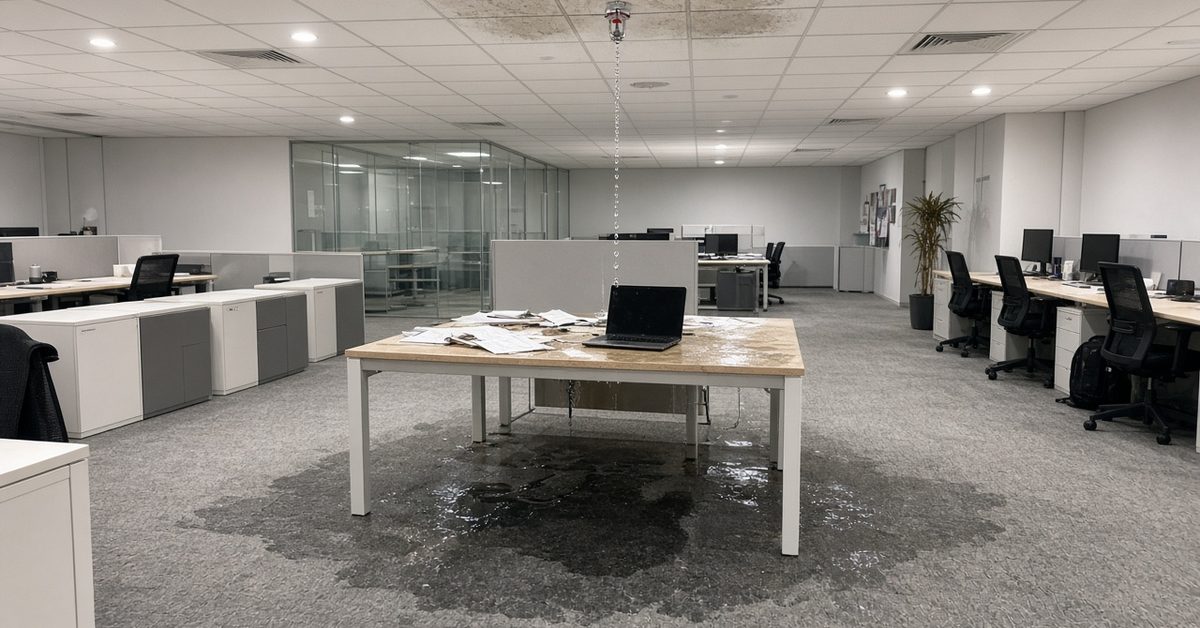
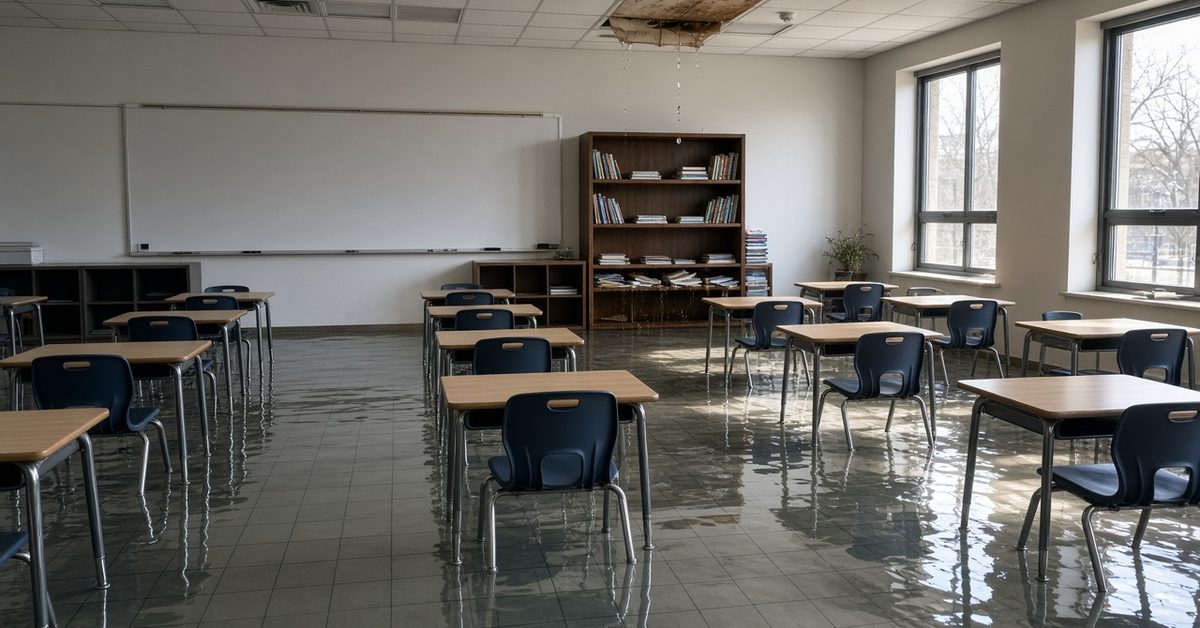
When a toilet supply line or a washing machine hose fails upstairs, water runs through the floor assembly, follows the pipes down through the chase, and drops into every unit below. It also spreads sideways along floor joists or concrete slabs, reaching corridors and neighboring units that do not share the same stack.
Timing makes it worse. A leak in an unoccupied unit, or one that starts overnight, can run for hours before a resident downstairs notices it.
The First Hour Matters Most
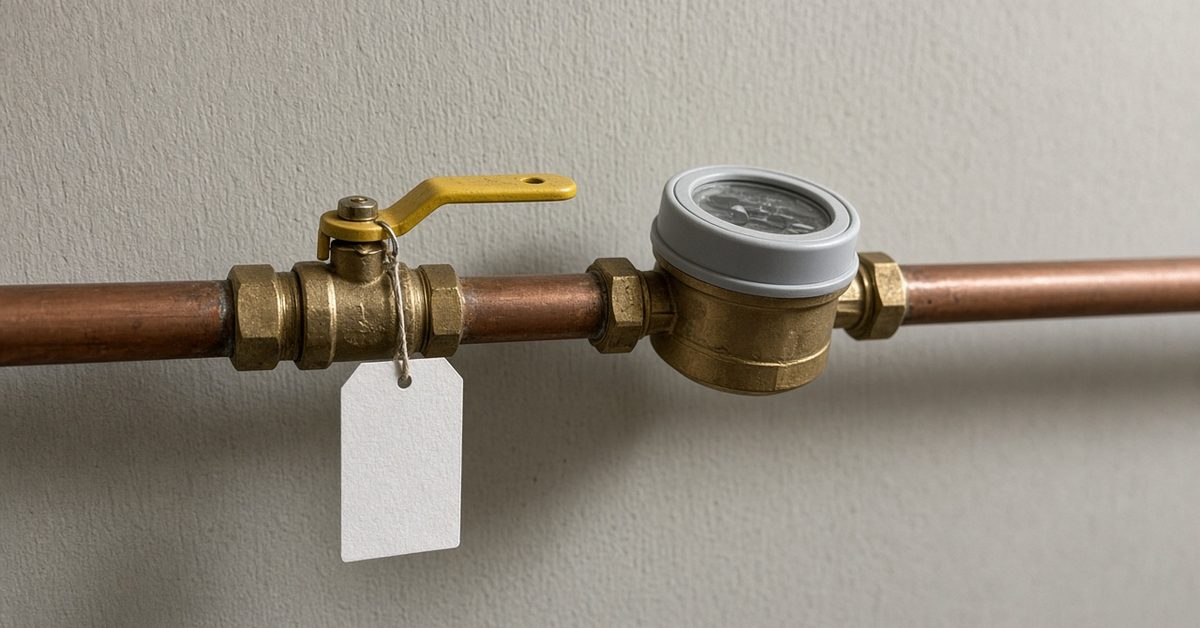
- Find and stop the source. Check the unit above the highest point of damage, then work up. If you can’t get in or can’t find it quickly, shut off the riser or the building supply.
- Cut power where needed. Water near light fixtures, panels, or outlets in any affected unit needs power shut off at the breaker.
- Notify every resident in the stack. Units that look dry may already have water in the ceiling.
- Protect contents. Help residents move electronics, documents, and valuables out of the path of the water.
- Document unit by unit. Photos in each affected space help sort out responsibility and insurance claims later.
- Call a restoration team with multi-unit experience. Early emergency response keeps a five-unit loss from becoming ten.
Finding Hidden Water Between Floors
The damage you can see in a multi-family building is usually the smallest part of the job. Water sits on top of ceiling drywall, soaks sound insulation between floors, and collects in wall cavities around the plumbing chase. In buildings with lightweight concrete toppings over wood subfloors, water can spread under flooring across an entire unit.
Professional water damage restoration starts with a moisture survey of every unit in the stack and the units beside it. Thermal imaging and moisture meters show exactly where the water went. That map drives the drying plan, which may include opening ceilings, removing wet insulation, cutting wall cavities near the chase, and setting up air movers and dehumidifiers across several units at once.
Keeping Residents in Their Homes
Every displaced resident means lost rent, relocation costs, and frustrated tenants. A good restoration plan works to keep people in place when it’s safe. That can mean containing work areas with plastic barriers, running quieter equipment at night, scheduling demolition around residents, and drying rooms in phases so part of a unit stays usable.
When belongings are affected, contents restoration lets residents get their things cleaned, dried, and returned rather than replaced, which helps with both tenant relations and claim costs.
Putting the Units Back Together
Once every unit is dry and documented, repairs begin. Coordinating drywall, paint, flooring, and cabinets across multiple units with different residents and schedules is where many multi-family projects stall. Having the same company handle mitigation and residential construction keeps the scope consistent, cuts down on handoffs, and gets units back online faster.
Reducing the Next Loss
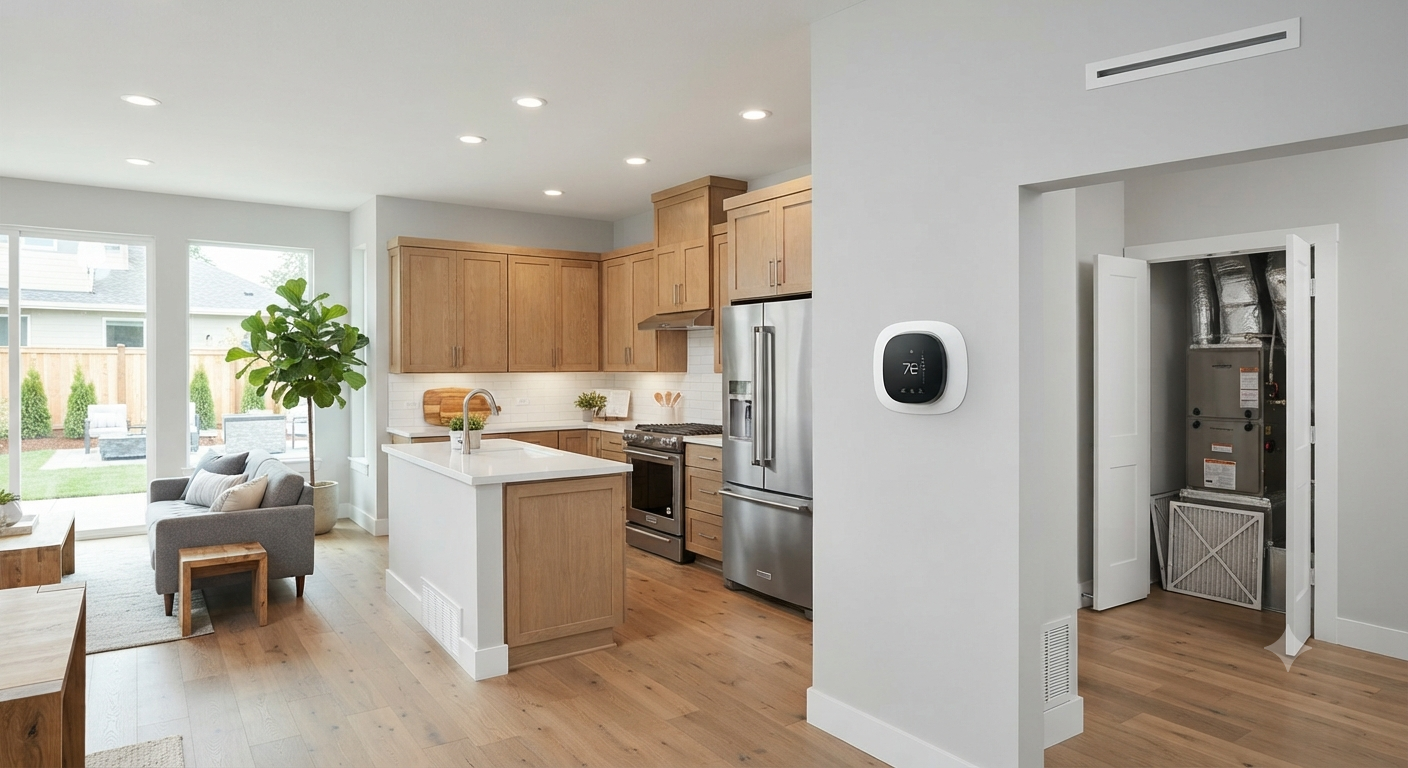
The most common sources we see in multi-family losses are failed toilet supply lines, washing machine hoses, water heater failures, and HVAC condensate overflows. A few steps make a real difference: replacing older supply lines during unit turns, adding leak sensors under water heaters and washers, labeling riser shutoffs clearly, and training maintenance staff to shut down water fast.
Frequently Asked Questions
Who pays when a leak in one apartment damages another?
It depends on the lease, the cause, and the insurance involved. Often the building owner’s policy covers the structure, while each resident’s renters policy covers their own belongings. If a tenant caused the leak through negligence, their liability coverage may come into play. Clear documentation of the source and the damage in each unit helps sort it out.
How long does drying take in a multi-family building?
Most stacked-unit losses take three to five days of drying, though units with water trapped in floor assemblies or lightweight concrete can take longer. Daily moisture readings in every unit confirm when each space is ready for repairs.
Do residents have to move out during restoration?
Not always. Many residents can stay while drying equipment runs, especially when work areas are contained. Relocation is more likely when kitchens or bathrooms are out of service, when ceilings need extensive removal, or when the water was contaminated.
How can we find the source faster?
Start with the unit directly above the highest point of damage and work upward. Check toilet supply lines, washer hoses, water heaters, and HVAC closets first, since those cause most multi-family leaks. Clearly labeled riser shutoffs let staff stop the water quickly while the exact source is found.
A Partner That Handles Size
Anderson Group International works with property managers, owners, and insurance carriers on losses of every size, from a single unit to an entire building. Call 1-800-994-7575 any time for immediate emergency response.