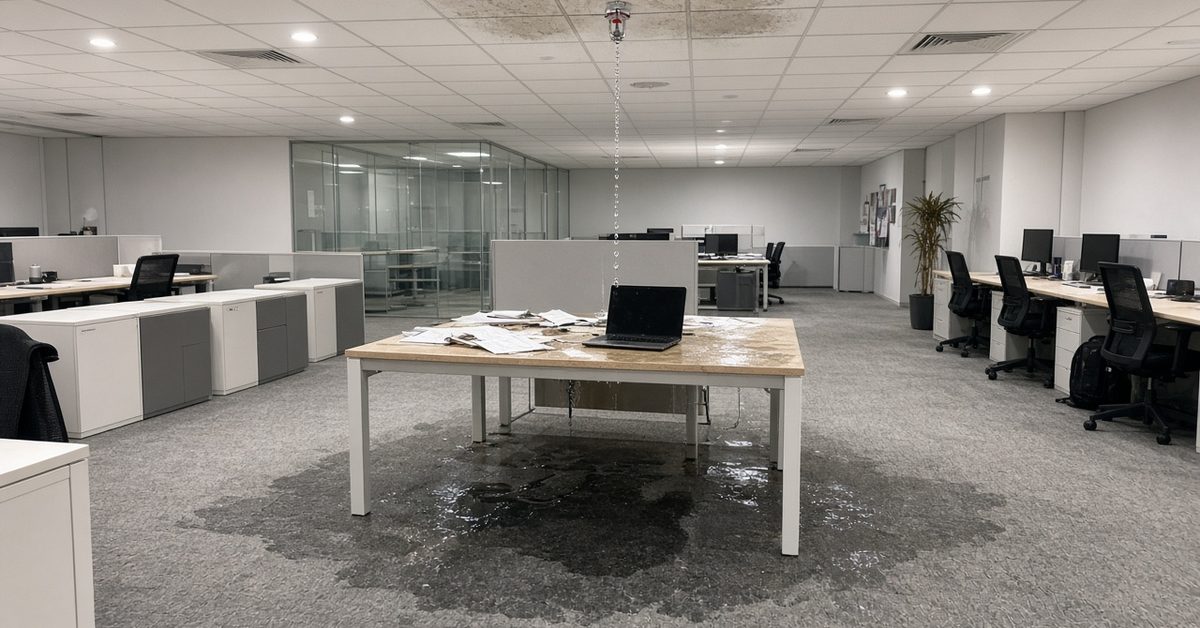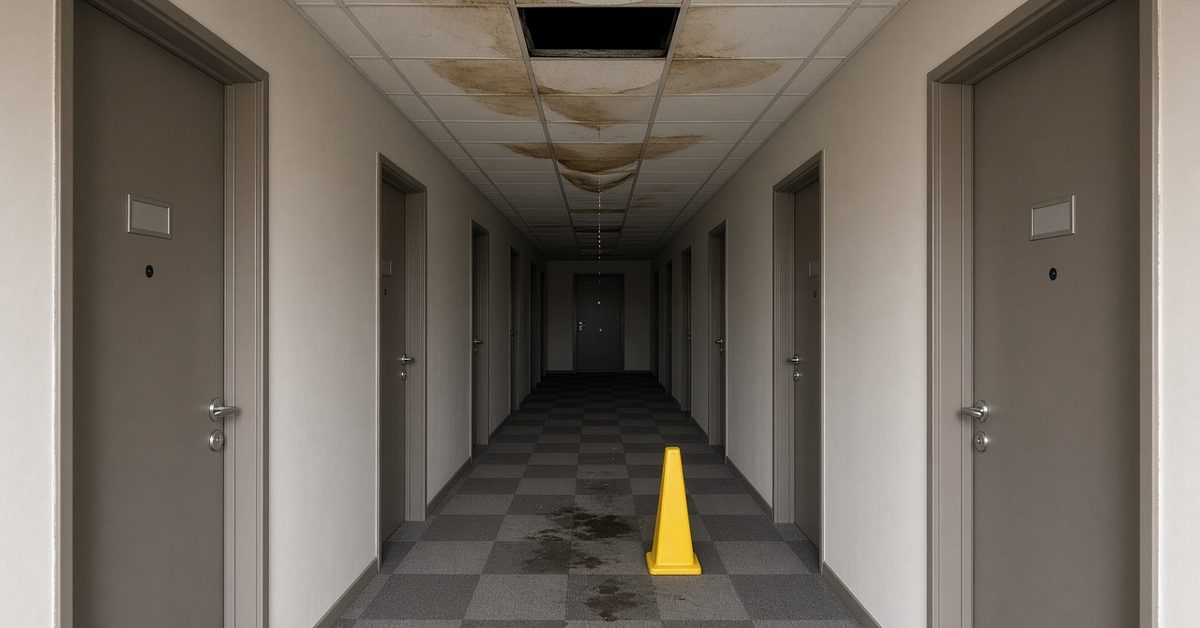
Some of the worst water losses in schools start on a Friday afternoon. The building empties out, the heat or cooling setback kicks in, and nobody walks the halls until Monday. A burst pipe in a stairwell, a failed valve in a restroom, or a roof drain that backs up in a storm can run for two or three days before the first custodian unlocks the doors.
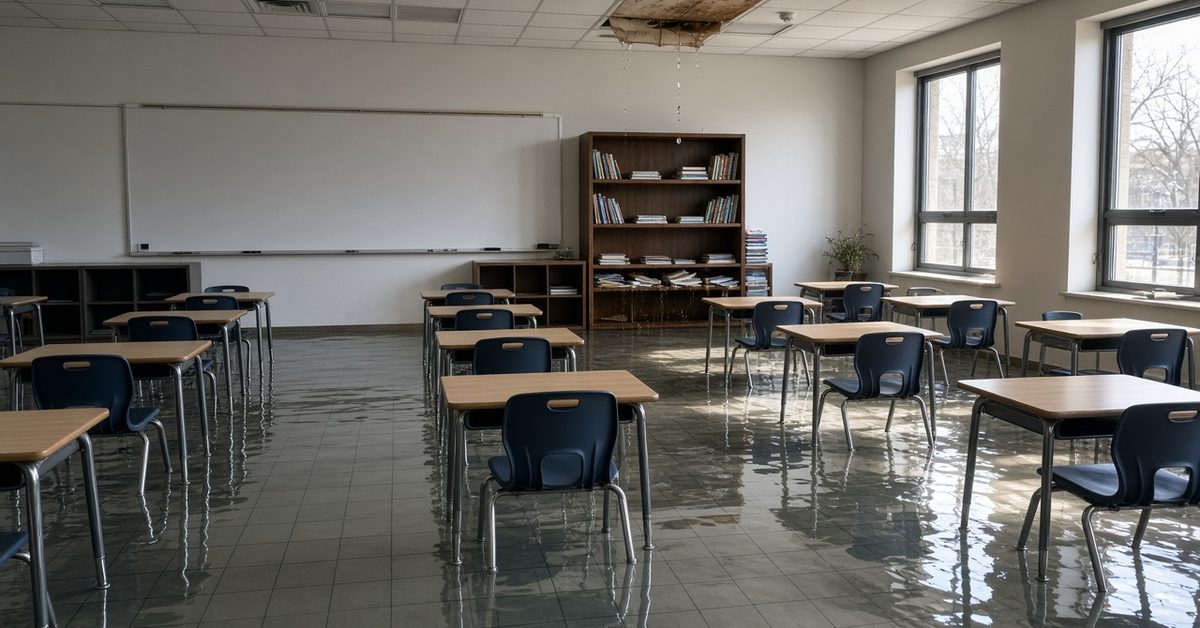
By then, the water has spread through classrooms, soaked carpet and ceiling tiles, and reached the gym floor or the library. Here is how schools can find these losses faster, respond well, and get students back into classrooms.
Why Schools Are Especially Vulnerable
School buildings are large, spread out, and often built in phases over decades. That means miles of piping, much of it older, running through ceilings, crawl spaces, and exterior walls. Many schools also have long periods with nobody on site: weekends, holidays, and summer break.
Cold weather adds risk in many parts of the country. Heat setbacks during breaks can leave pipes near exterior walls, in entryways, or above ceilings vulnerable to freezing. Roof drains and flat roofs can back up during heavy storms. And fire sprinkler lines, especially in unheated areas, can freeze and break.
Common Sources
- Frozen and burst pipes near exterior walls or in unheated vestibules
- Restroom fixture valves and flush valves that stick open
- Roof drains clogged by leaves or debris during storms
- Fire sprinkler line breaks
- HVAC condensate lines and chilled water lines
- Kitchen equipment and dishwasher supply lines
What Monday Morning Looks Like
When staff discover water after a long weekend, the first priorities are safety and containment. Shut off the water to the affected zone. Keep students and staff out of wet areas, especially where ceiling tiles are sagging or water is near electrical equipment. Photograph and video everything before cleanup begins.
Then the questions start. Which rooms can be used today? Where do displaced classes go? How long will the gym be down? A restoration partner that responds quickly and gives clear answers makes a big difference in that first morning.
How Water Damage Restoration Works in a School
Professional water damage restoration begins with a building walk and moisture survey to map exactly where water traveled. In schools, that often includes classroom carpet, ceiling tiles, gypsum walls, wood gym floors, library stacks, and storage rooms full of paper and supplies.
The drying plan is built around the school’s schedule. Crews can work nights and weekends, contain work zones with barriers, and use equipment that keeps noise and air disruption down in occupied areas. Rooms are dried and cleared in priority order so the building can reopen in sections rather than waiting for the whole job to finish.
Books, records, electronics, and classroom materials often need their own attention. Contents restoration lets schools salvage what can be saved, which helps with both budgets and continuity.
Rebuilding Around the Calendar
Once areas are dry, repairs include replacing ceiling tiles, drywall, flooring, and finishes. For larger losses, commercial construction can be scheduled in phases so classrooms return to use one wing at a time. Planning around testing weeks, events, and breaks keeps disruption to a minimum.
Planning Ahead Pays Off
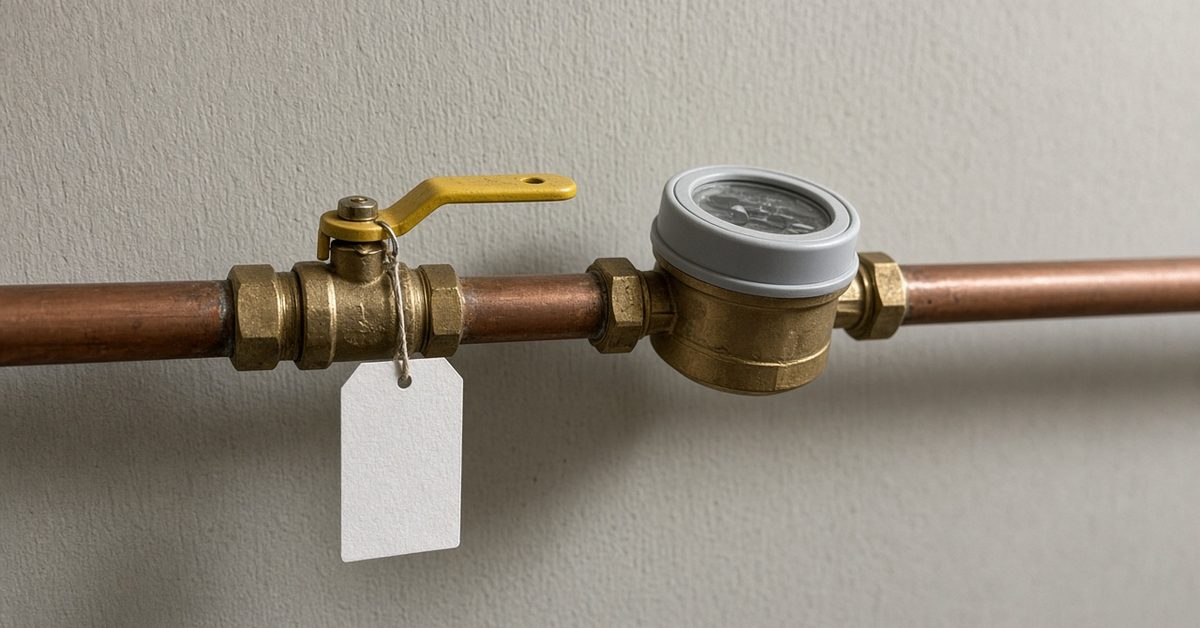
The schools that recover fastest usually have a plan in place before anything goes wrong. That means knowing where every shutoff valve is, having a list of priority spaces, keeping emergency contacts current, and having a restoration partner already set up. Our emergency response program helps districts and facility managers build that plan, including site information and priorities, so response on the day of a loss is fast and organized.
A few low-cost steps help too: water leak sensors in mechanical rooms and restrooms, a walk-through before long breaks, and checks on heat settings in areas with exposed piping.
Frequently Asked Questions
Can classrooms be used while drying equipment is running?
Sometimes. Rooms with equipment running are usually closed, but neighboring spaces can often stay open when work areas are contained and noise is managed. We plan drying around the school’s schedule and prioritize the spaces the school needs first.
Can wet gym floors be saved?
Wood gym floors can sometimes be saved if drying starts quickly and the water didn’t sit long. Specialized floor drying systems pull moisture from beneath the boards. If the floor has cupped badly or the subfloor stayed wet too long, replacement may be the better option. A quick assessment makes the difference.
What happens to library books and records that got wet?
Wet books and paper records can often be saved with freezing and controlled drying, which stops further damage until items can be processed. Items that are soaked with contaminated water may not be salvageable. Acting within the first day or two improves the odds.
How can schools spot leaks during breaks?
Water leak sensors in mechanical rooms, restrooms, and near known problem areas can send alerts to facility staff. Walk-throughs before and during long breaks, and checking heat settings in areas with exposed piping, catch many problems before they become major losses.
Serving Education Facilities
Anderson Group International works with K-12 districts, colleges, and universities to respond quickly and keep learning on track after water damage. For immediate help, call 1-800-994-7575, 24 hours a day.