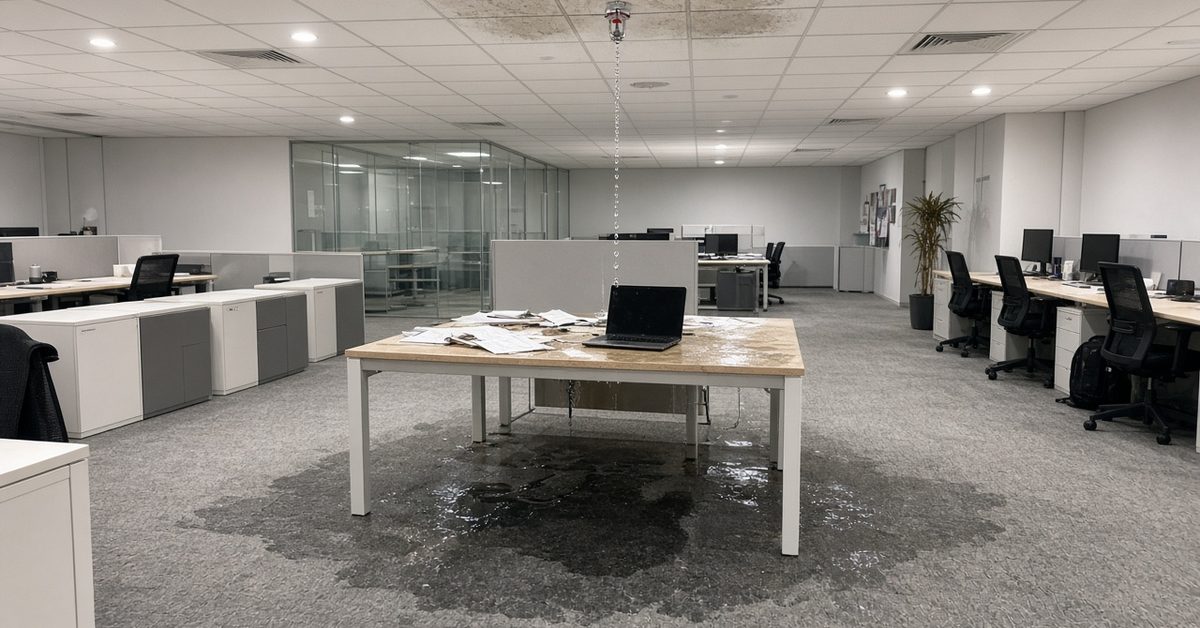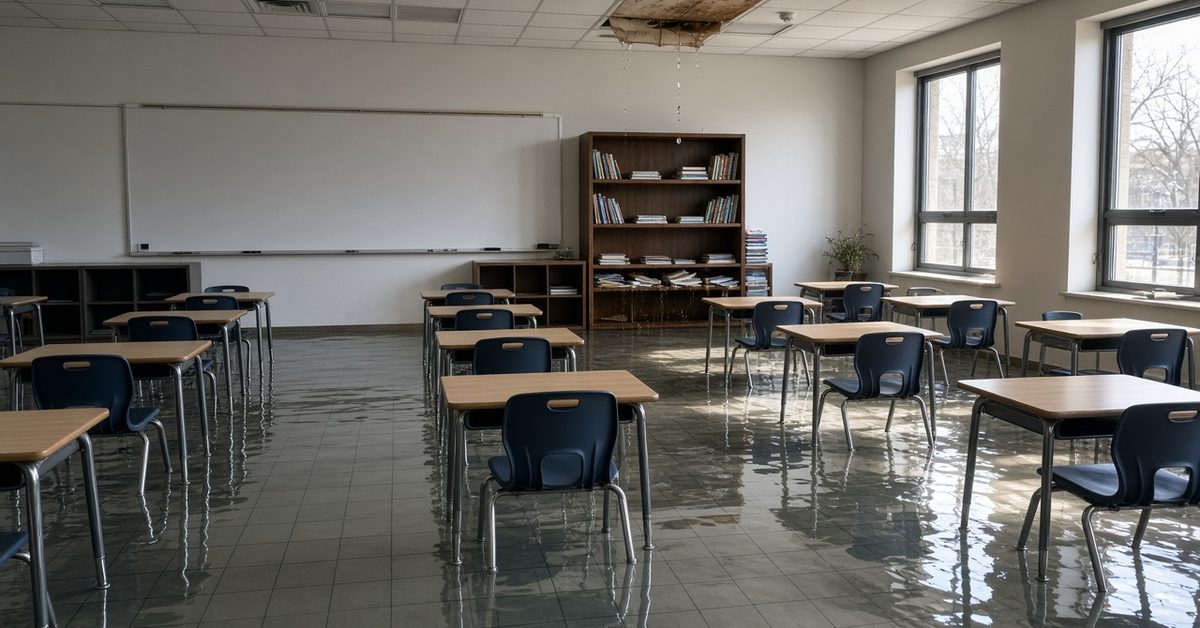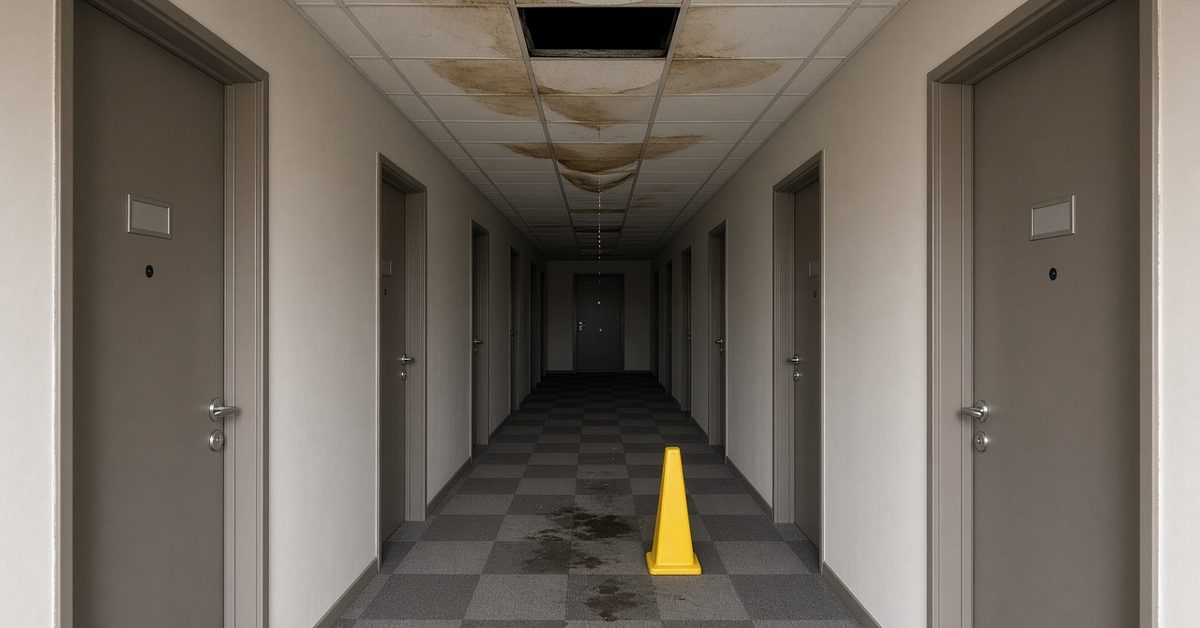
Every property manager eventually gets the call. It might be 2 a.m. on a holiday weekend. Water is coming through a ceiling, a resident or tenant is upset, and somebody needs to make decisions fast. How that night goes depends almost entirely on what was set up months earlier.
The managers who handle water losses well aren’t lucky. They planned. Here is what a practical water emergency plan looks like and why it makes such a difference when water shows up.
What Goes Wrong Without a Plan
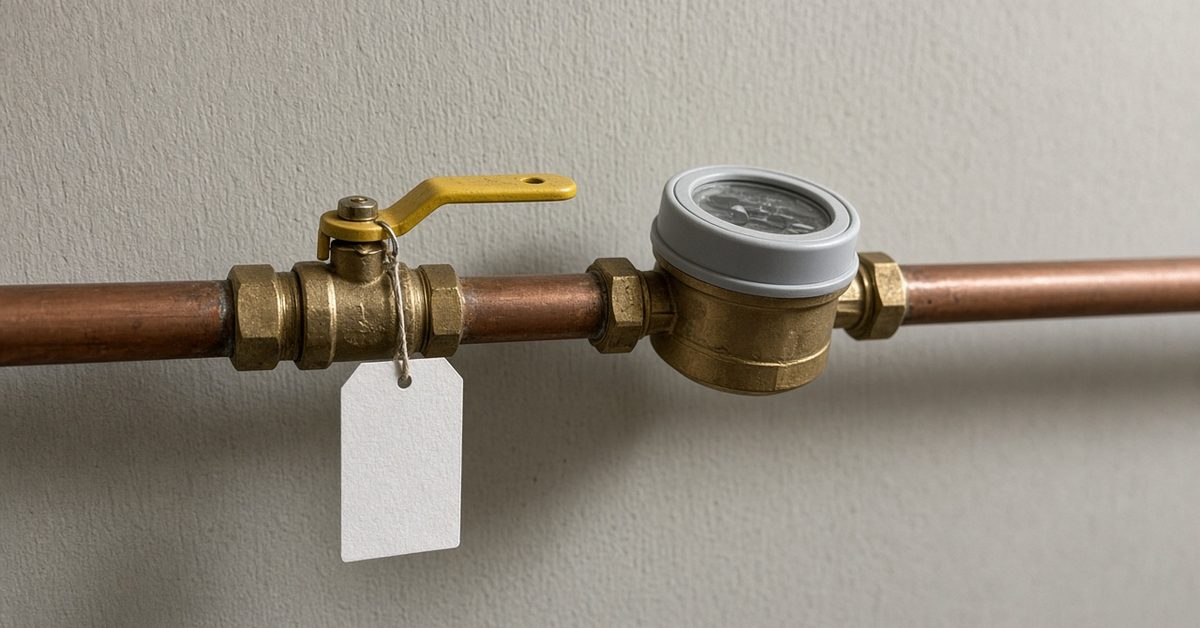
Without a plan, the first hour gets spent on things that should already be known. Nobody is sure where the main shutoff or the riser valves are. Maintenance can’t find keys to the mechanical room. There is no current contact list for owners, insurers, or vendors. The first restoration company that answers the phone gets the job, whether they are right for it or not.
Meanwhile, water keeps flowing, and every minute makes the loss bigger.
What a Good Plan Includes
Building information. Floor plans, the location of every main shutoff, riser valve, sprinkler control valve, electrical panel, and gas shutoff. Photos help. So do clear labels on the valves themselves.
Priority spaces. Server rooms, records storage, high-value inventory, medical areas, and occupied units that need attention first.
Contacts. Owners, maintenance staff, insurance carriers and agents, utility companies, plumbers, electricians, and a restoration partner, with after-hours numbers for each.
Decision authority. Who can approve emergency work, and up to what amount, so crews don’t have to wait for signatures while water spreads.
Communication. How residents or tenants will be notified, and who handles that.
Our emergency response program helps property managers build exactly this kind of plan, with site details and priorities on file before anything goes wrong.
Why Pre-Qualifying a Restoration Partner Matters
Picking a restoration company in the middle of a crisis is a bad time to be comparing credentials. When a partner is chosen ahead of time, the terms, pricing expectations, insurance requirements, and access procedures are already agreed on. That partner already knows the building, and many will prioritize response for clients enrolled in their program.
For portfolios with multiple properties, a partner with national reach means one standard of work and one point of contact across every site.
What Happens When a Loss Occurs
With a plan in place, the call goes straight to your partner’s emergency response line. The crew arrives knowing where the shutoffs are and which spaces come first. Water is stopped, power is secured, and extraction starts right away.
From there, water damage restoration follows a clear process: moisture mapping, removal of materials that can’t be saved, structural drying, and daily monitoring until everything is dry. Documentation is built from day one to support insurance claims and owner reporting.
Planning for the Big One
Most water losses are a single unit or a single floor. But property managers in areas prone to hurricanes, floods, or severe winter storms need to think bigger. Regional events can damage many properties at once, and local contractors get overwhelmed fast. Catastrophe response capability, with the ability to bring in crews and equipment from outside the area, is what keeps a portfolio from waiting weeks for help.
A Simple Place to Start
If you don’t have a plan today, start small. Walk each property with your maintenance lead, find and label every shutoff, and put the locations in a shared document. Build a current contact list. Then talk to a restoration partner about setting up a formal program.
Frequently Asked Questions
How long does it take to build a water emergency plan?
For a single property, a basic plan can come together in a site walk and a few hours of follow-up. Portfolios with many buildings take longer, but most of the work is gathering information you already have and putting it in one place.
Does a restoration partner charge for setting up a plan?
Many restoration companies, including AGI, offer pre-loss planning programs to property managers and facility teams. Ask what the program includes, how the information is stored, and what response commitments come with it.
What should maintenance staff know without looking anything up?
The location of the main water shutoff, riser valves, sprinkler control valve, and electrical panels for every building they cover. They should also know who to call first and who can approve emergency work after hours.
How often should the plan be updated?
Review it at least once a year and after any major change, like new staff, renovations, a new insurance carrier, or new tenants in critical spaces. An outdated contact list is one of the most common reasons emergency response slows down.
Should the plan cover fire and storm too, not just water?
Yes. Most of the same information, like shutoff locations, contacts, and priority spaces, applies to any emergency. Adding gas shutoffs, fire alarm panels, and board-up needs turns a water plan into a full property emergency plan with very little extra work.
Let’s Build Your Plan
Anderson Group International works with property managers, facility teams, and owners across the country to plan for water emergencies and respond when they happen. Call 1-800-994-7575 to get started, or any time you need immediate help.